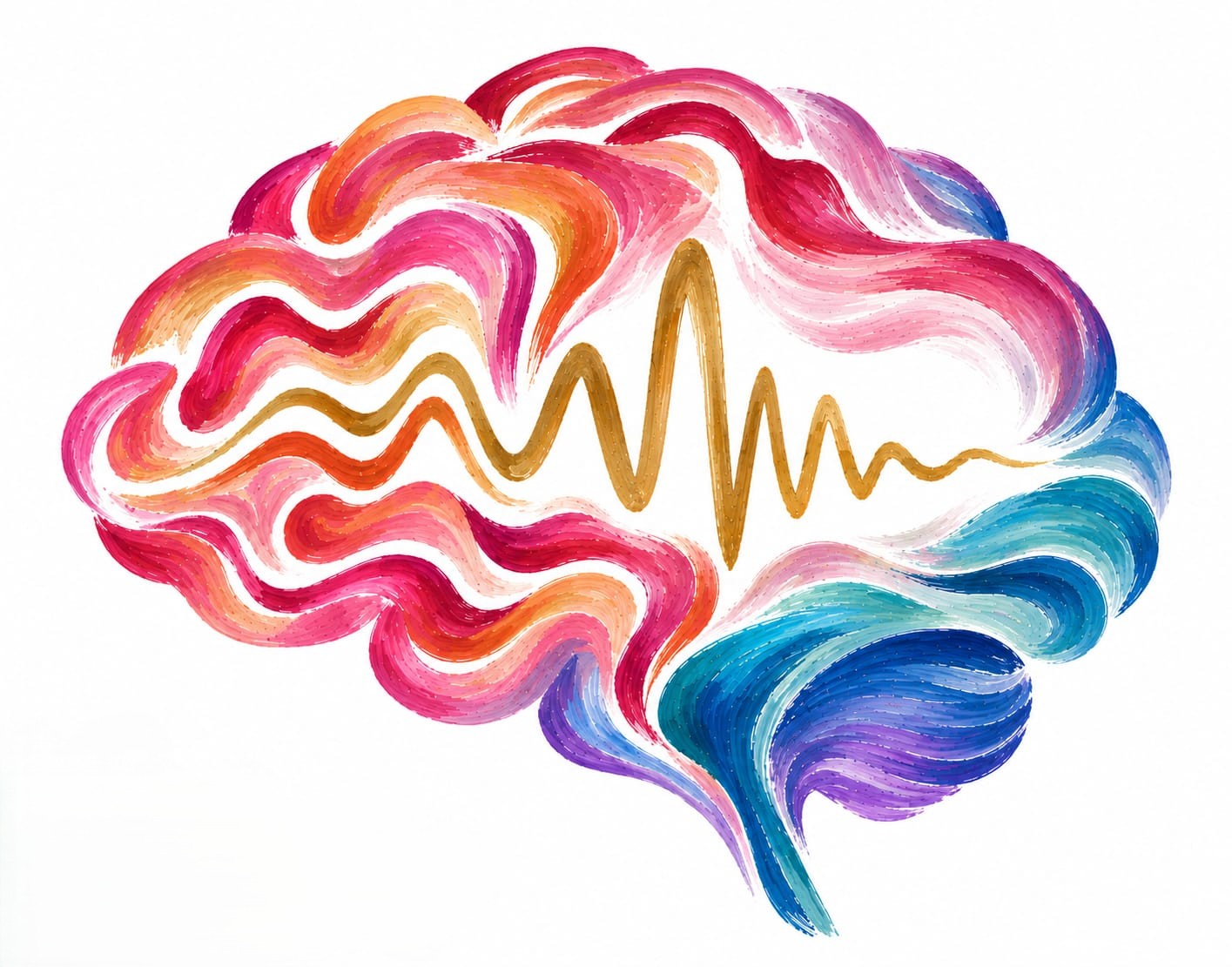
My research focuses on the oscillatory mechanisms underlying cognition and their alterations across healthy aging and neurological disorders. Over the past two decades, I have investigated event-related brain oscillatory dynamics across the lifespan, from childhood and young adulthood to healthy aging, with particular emphasis on how task-related neural responses differ from spontaneous EEG activity.
A major line of my research has been the identification of EEG-based markers of cognitive and emotional processing and their potential translational value in neurodegenerative disorders. Our studies have demonstrated that frontal and central delta (0.5–3.5 Hz) and theta (4–7 Hz) responses are progressively altered with cognitive decline, providing electrophysiological signatures that may help differentiate healthy older adults from individuals with Alzheimer’s disease and Parkinson’s disease dementia.
More recently, my research has expanded from identifying abnormal oscillatory patterns to investigating whether these neural dynamics can be modulated to improve cognitive function. We use individual EEG characteristics to develop personalized neuromodulation approaches, including frequency-tailored transcranial alternating current stimulation (tACS). In parallel, we investigate 40-Hz visual and auditory sensory stimulation as a non-invasive approach to modulating brain oscillations and supporting cognitive function.
Our current work combines mechanistic EEG research with translational intervention studies, ranging from controlled experiments in healthy individuals to long-term, home-based 40-Hz sensory stimulation in people with Alzheimer’s disease and related cognitive disorders. Ultimately, my research aims to understand how brain oscillations can serve not only as biomarkers of neural dysfunction, but also as targets for individualized therapeutic interventions.